日Chapter 05 · Daily life
Hospitals & medical care
Find a doctor, prepare for the visit, and the phrases you'll need
Choose a situation
A doctor who speaks your language
院Hospitals and clinics where your language is spoken→歯Dentists where your language is spoken→AMDA medical information line. Free, in several languages: they find a hospital where your language is spoken and explain the Japanese system. Monday to Friday, 10:00–16:00, except public holidays: 0120-339-266 · 03-6233-9266
英語の通訳はいますか?
Is there an interpreter for my language? — show it at reception.
Sick child? Call first
Advice · evenings & weekends
#8000Pediatric advice line (小児救急) — a nurse/doctor, evenings, nights & weekendsNot sure?
#7119Emergency advice (救急安心センター) — "should we call an ambulance?", adults too (where available)Life-threatening
119Ambulance — life-threatening signs: trouble breathing, a seizure over 5 min, unresponsiveUsually not an emergency
A high fever alone, if the child is drinking and responsive.
Seek care
- Fever under 3 months old
- Seizure over 5 min
- Hard breathing
- Limpness
- Stiff neck
帳Keep records in the 母子健康手帳 (Maternal & Child Health Handbook — free at city hall, multilingual versions exist). Routine vaccinations (定期予防接種) are free and come with 予診票 forms.
A hospital stay is capped
The most you pay in a month
¥36,900 – ¥270,300New ceilings since 1 August 2026The High-Cost Medical Expense Benefit (高額療養費) refunds anything you pay above your monthly ceiling, and there is now a yearly ceiling too.
Ask the hospital for a 限度額適用認定証 before you are admitted, so you only pay the capped amount at the counter.
See the ceilings by income bracketMedical care questions
How do I find a doctor who speaks my language in Japan?
Search Keigo's directory, which shows the languages each clinic is known to speak; the list of medical institutions of the Japan National Tourism Organization (JNTO); or call the AMDA International Medical Information Center. Your embassy also keeps a list, and many large hospitals have an international patient desk.
Does Japanese health insurance cover my visit?
Yes. With National Health Insurance or an employer's plan, most adults pay 30% at the counter and the insurance pays the rest. At each visit, show your My Number card registered as a health insurance card (マイナ保険証) or your certificate of eligibility (資格確認書): since August 2026, an old insurance card on its own counts as no card, and you may have to pay the full cost and claim it back later.
What number do I call for an ambulance in Japan?
Dial 119, free and 24 hours a day, for an ambulance or the fire brigade. When you hear “火事ですか、救急ですか” (a fire or an ambulance?), say “救急です” (kyūkyū desu), then give your address. Not sure it is an emergency? In many areas, #7119 tells you whether to go to hospital.
Which medicines are banned or restricted in Japan?
Amphetamine-based ADHD medicines such as Adderall or Vyvanse are banned, even with a prescription, and so are cold medicines high in pseudoephedrine, such as some Sudafed. Other medicines are allowed for personal use up to a quantity limit; above it, you need a Yakkan Shōmei import certificate before you travel. The medications tab of this page gives the limits.
How do prescriptions and pharmacies work in Japan?
The doctor gives you a prescription (処方箋, shohōsen) to take to a pharmacy (薬局, yakkyoku) within 4 days, the day it was written included. The pharmacist explains the dose and can record what you get in a medicine notebook (お薬手帳, okusuri techō).
What should I bring to a clinic in Japan?
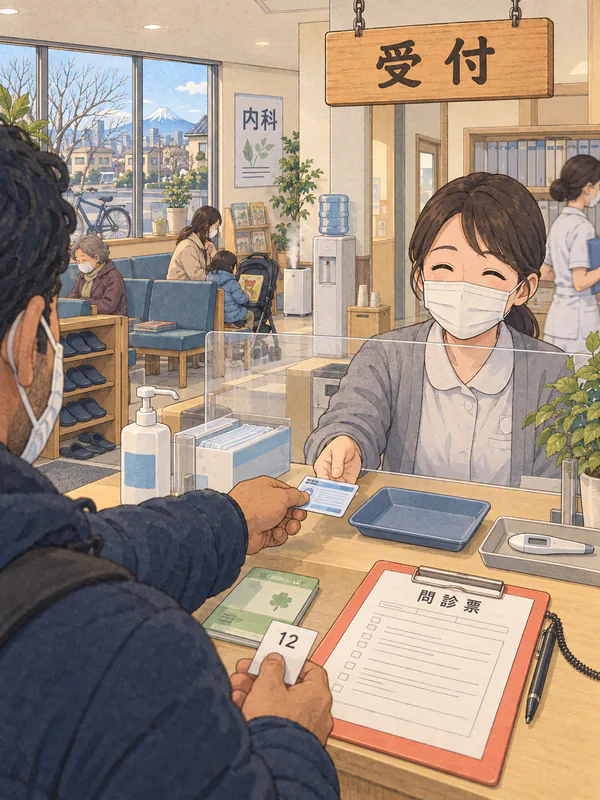
Your My Number card registered as a health insurance card (マイナ保険証) or your certificate of eligibility (資格確認書), your residence card, your medicine notebook or a list of what you take, and cash: some small clinics do not take cards.