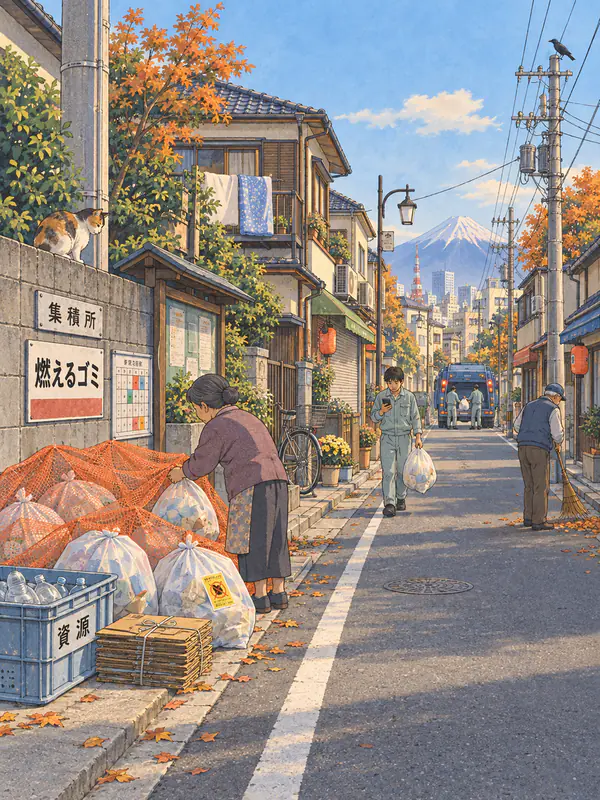
How to sort and dispose of your garbage in Japan — burnable, non-burnable, recycling and collection days.
Waste Categories
Japanese garbage is divided into five main categories. The exact rules vary by municipality, but these categories are universal.
Moeru gomi (burnable)
Burnable / Combustible
Kitchen waste, paper, clothing, leather, rubber. This is the most frequent collection — usually twice a week.
Moenai gomi (non-burnable)
Non-Burnable
Ceramics, glass, small metal items, broken crockery, umbrellas. Collected less often — typically once or twice a month.
Shigen gomi (recyclable)
Recyclables
PET bottles (wash, remove cap and label), aluminum and steel cans, newspapers, cardboard, glass bottles. Separate by material.
Sodai gomi (oversized)
Furniture, appliances, mattresses, bicycles. Requires advance booking and a disposal sticker (sodai gomi sticker) purchased at a convenience store.
Kiken gomi (hazardous)
Hazardous Waste
Batteries, fluorescent lights, spray cans (must be emptied), lighters. Often collected separately — check your local rules.
Collection Schedule
Check your city or ward website for the exact collection calendar — schedules differ by neighborhood.
Collection days are strict. Burnable waste might be Monday and Thursday, recyclables on Wednesday, etc.
Put out your garbage in the morning, usually before 8:00 AM. Never the night before.
Use your designated collection spot (shusekijo). Your building manager or neighbors can show you where it is.
Using the wrong bag type — many cities require designated garbage bags (shitei gomi bukuro) sold at convenience stores and supermarkets.
Putting out garbage the night before collection day. Animals (especially crows) will tear open bags.
Mixing burnable and non-burnable waste. If your bag is rejected, it will be left at the collection spot with a warning sticker.
Not washing PET bottles before recycling. Rinse them, remove the cap and label, and crush them flat.
Leaving caps on PET bottles. Caps and labels go in separate recycling categories (plastic waste) in most cities.
Tips
Download your city's garbage sorting app (gomi bunbetsu app). Many cities offer multilingual apps that tell you which day to put out each type of waste.
If you are unsure about anything, ask your neighbors or building manager. They will appreciate that you care about sorting correctly.
Check the collection calendar posted in your building entrance or on your city's website. Some buildings also have sorting charts near the garbage area.
Rules for your city
Designated garbage bags
City-designated bags required
No designated bags required
Garbage app & calendar
Open official garbage calendar
Exact categories and collection days vary by municipality — always check the official calendar linked above. The generic guide below applies everywhere.